Reviewing When in Doubt Pray It Out for Real Projects
As a designer who has spent years digitizing and stitching thousands of machine embroidery design files, I have learned that not all text-based motifs are created equal. Some look crisp on the screen but turn into a tangled mess under the needle. Others lack the emotional weight required for meaningful gifts. Today, I am taking a close, practical look at When in Doubt Pray It out, a faith-themed motif that promises to be a beacon of hope. I am evaluating this piece not just as a digital asset, but as a tangible component of real-world embroidery project workflows, from small shop merchandise to personalized client commissions.
First Impressions and Visual Personality
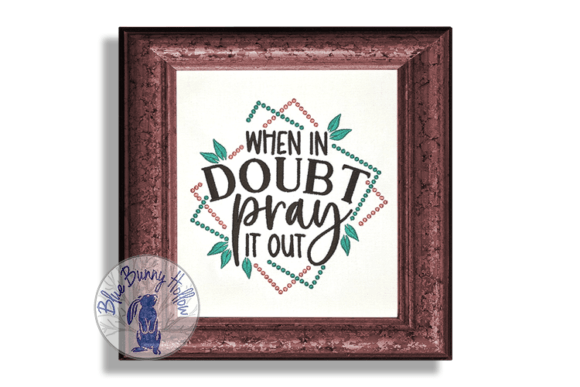
The first thing that strikes me about When in Doubt Pray It out is its balanced approach to typography and sentiment. In the world of Religion and faith-based crafting, designs often swing too far toward ornate complexity or stark minimalism. This design sits comfortably in the middle, offering a charming aesthetic that feels approachable rather than preachy. The layout suggests a clear visual hierarchy, which is crucial when you are working with an embroidery file that needs to be legible at various sizes.
The mood it creates is one of gentle reassurance. For a crafter or Etsy seller, this is vital. Customers buying faith-based items are often looking for comfort, making this design ideal for personalized gift scenarios. The visual personality is clean enough to work on modern custom apparel yet traditional enough to suit classic home decor. It does not rely on excessive decorative flourishes that might compromise stitch integrity, which tells me the digitizer likely prioritized stitch clarity over unnecessary embellishment.
Real-World Application: The Tote Bag Test
To truly understand how a design performs, you have to imagine it on a specific substrate. Let us consider a common scenario: preparing a custom tote bag design for a local church boutique or a handmade market stall. Canvas tote bags have a distinct weave and texture. If the stitch density of When in Doubt Pray It out is too low, the fabric grain will show through the letters, ruining the professional look. If it is too high, the bag will pucker and become stiff.
In my mental simulation of stitching this onto a heavy cotton canvas, the design’s structure holds up well. The lettering appears substantial enough to cover the fabric texture without requiring an excessive amount of underlay that might bulk up the material. This makes it a strong candidate for small shop product lines where consistency and durability are key. It would also translate beautifully to a sweatshirt embroidery project, where the loft of the fleece can sometimes swallow up finer details. Here, the boldness of the phrase ensures the message remains readable even on textured garments.
Versatility Across Product Lines
Beyond totes and sweatshirts, this design shows promise in several other categories. For baby embroidery, such as on a soft muslin swaddle or a onesie, the charm of the message resonates with parents seeking spiritual grounding for their children. However, one must be cautious with scale. On smaller items like baby caps or pocket squares, the full phrase might need to be resized carefully to maintain legibility.
It also fits naturally into the holiday embroidery calendar, particularly for Easter or Christmas gifts where themes of faith and hope are prominent. Imagine this stitched onto a kitchen towel or an apron; it becomes a functional piece of art that sparks conversation. For commercial embroidery clients, such as religious bookstores or counseling centers, this design could serve as a subtle branding element on merchandise, enhancing brand consistency without being overly corporate.
Technical Considerations and Stitch Behavior
While the aesthetic is appealing, the technical execution is where many designs fail. When reviewing When in Doubt Pray It out, I look closely at how the transitions between letters are handled. Are there excessive jump stitches that will need trimming? Does the design utilize satin stitch for smaller elements and fill stitch for larger areas appropriately? A mix of stitch types can add visual interest and reduce bulk, but it requires precise digitizing.
One area to watch is the handling of curved surfaces. If you plan to use this on a cap or a structured hat, the design must be able to withstand the curvature without distortion. Text designs often struggle here if the baseline is not adjusted for the dome shape. I recommend testing the design on a scrap piece of similar fabric before committing to a final finished product. This is especially true for embroidered patch creation, where the edges need to be clean and the backing stable.
Fabric and Stabilizer Choices
The choice of stabilizer will make or break this project. For stretchy fabrics like jersey t-shirts, a cut-away stabilizer is non-negotiable to prevent the design from warping after washing. For woven fabrics like linen or cotton, a tear-away might suffice, but only if the thread colors provide enough contrast against the fabric texture. Dark fabrics pose a unique challenge; if the design includes light threads, ensure the digitizing includes proper underlay to prevent the dark fabric from peeking through the satin columns.
Always check the recommended hoop size before purchasing or downloading. While this design seems versatile, forcing a large design into a small hoop can cause registration issues. Conversely, shrinking a complex design too much can cause the stitches to merge, turning legible text into a blob. If you are creating a printable mockup for your online store, ensure the digital representation matches the realistic scale of the stitched output to manage customer expectations.
Commercial Viability and Brand Trust
For craft business owners, the value of a design lies in its ability to generate sales and build trust. When in Doubt Pray It out has high "giftability." It is the kind of phrase that people buy for others during difficult times, which means it has evergreen appeal. Using high-quality design assets like this enhances the perceived value of your handmade product. Customers can spot a poorly digitized file from a mile away; clean, crisp stitching signals professionalism.
However, before listing this as a digital embroidery file or selling finished items, you must confirm the licensing terms. Some designers allow commercial use of finished physical goods but restrict the resale of the digital file itself. Always read the fine print. Additionally, consider how this design fits into your broader catalog. Does it complement your other applique design offerings? Does it align with your brand’s voice? Consistency helps buyers recognize your shop and return for future purchases.
Final Designer Notes
Before you load this into your machine, take a moment to review the technical specs provided by the creator. Check for included formats to ensure compatibility with your specific machine brand. Test the design in black and white on your computer screen to see if the contrast holds up without color reliance. Inspect the small details, such as the dots on the "i"s or the tails of the "y," to ensure they are not too fragile for high-speed stitching.
Ultimately, When in Doubt Pray It out is a solid addition to any faith-focused embroidery library. It balances emotional resonance with technical practicality. Whether you are stitching a single personalized gift for a friend or producing a batch of tote bag design prototypes for your Etsy seller storefront, this design offers the reliability and charm needed to create a memorable finished product. Just remember to respect the materials, choose the right stabilizer, and always stitch a test run first.